Me in Us
A personal journey through family, curiosity, and spirituality to understand the deeper meaning of respect, the nature of freedom, and the experiences that shape who we are.
A personal journey through family, curiosity, and spirituality to understand the deeper meaning of respect, the nature of freedom, and the experiences that shape who we are.
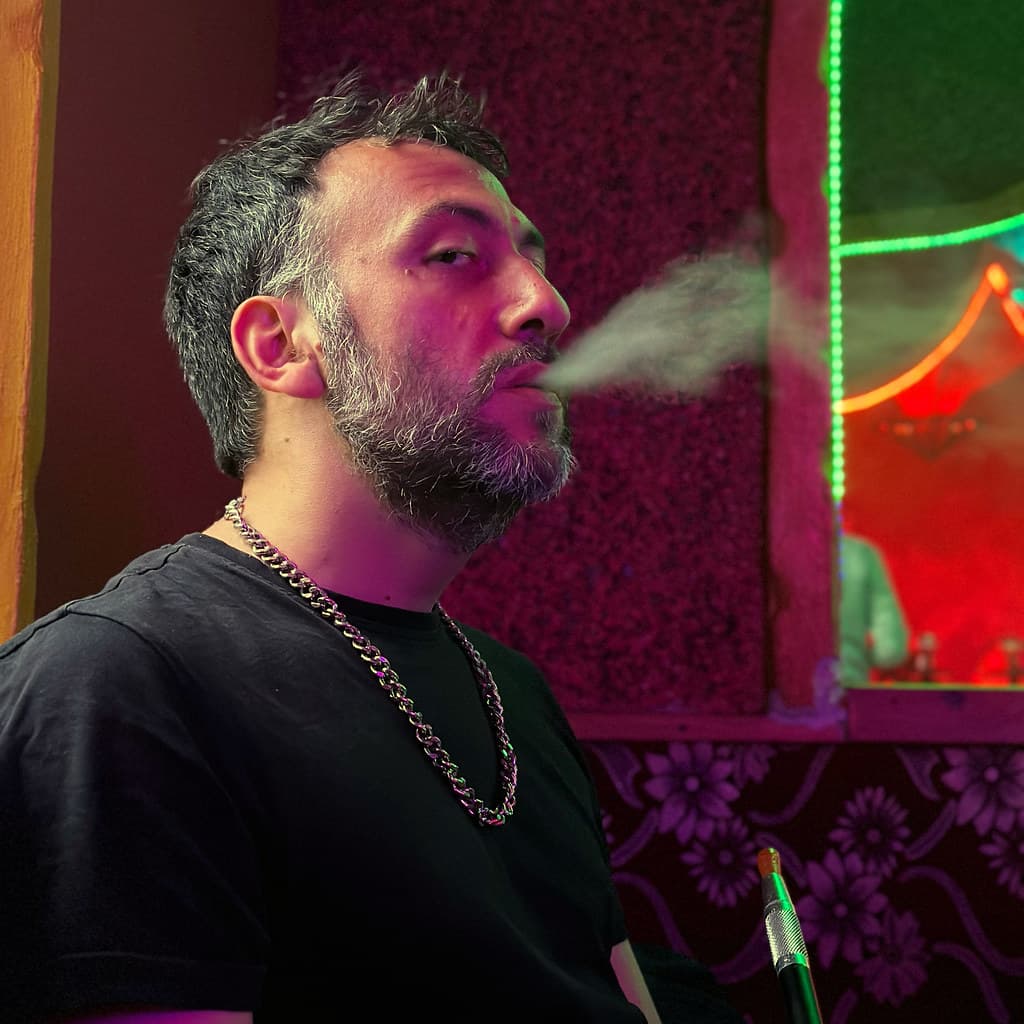
September 28, 1988. One of two boys. Two years older than his brother. From a low-income Muslim family in a small district of Trabzon. His brother frequently falls ill, coming close to death dozens of times. His mother and father visit countless doctors and religious healers, but they cannot find a solution to their troubles. The problems are put off. After high school, he attends a private university in Istanbul without a scholarship. He tries to make ends meet with the money he earns by working alongside his family. His mother bears more of the burden. He becomes a computer engineer and begins working in Istanbul.
Curiosity. He is interested in a lot of subjects. He tries, gets it wrong, and tries again. He tries, gets bored, and tries again. He tries, gets tired, and tries again. He always strives to choose and do what is right. He tries to find something without fully knowing what he is looking for. He is scared, sometimes. Somehow, he manages to escape the systematic whirlpools into which he has been drawn. He struggles with the consequences of the choices made by those around him. He cannot make sense of it. He blends his own convictions with his perspectives on different subjects. He tries to understand. He experiences how similar emotions manifest themselves across different cultures. Years pass, and he learns. He is no longer scared.
Spirituality. He questions, and asks. He refines in his mind the things he has experienced. He understands better. He realizes that he is not solely responsible for what he has been through. He grows tired and writes. He can speak openly about what he has experienced and why. He grows tired again. He realizes that he has been unable to be himself. He observes that what has happened, and what has been denied the chance to happen, are not solely his own problems. He shares with society the idea that the issue is not one of identity, but of the self. Amid the pain that must never be repeated, he becomes isolated. In reality, he is getting isolated. He now understands how the emotions of people in a crowd are abused. He targets the root cause of illnesses for which no cure has been found, hidden beneath the multifaceted fluctuations of the self. For everyone, and himself.
We. He strives to help the truth be understood within a social order in which neither love nor hatred is entirely within one's own control. He draws strength from the logic inherent in nature. Time passes, and once again he grows tired. Some leave; others stay. He tries to escape the harm caused by a global system in which everyone and no one is guilty at the same time. Since he did not choose for himself what he wanted to find, he waits to see what will become of him. He charts his own course amid the unawareness of those who are certain of themselves and the struggles of those searching for themselves. He knows it will not be easy. Because he believes that the suffering along this path must never be repeated, he does not choose to stop.

Every word can have a different meaning in the mind. In our life experiences, we shape the meanings in our minds like sculptors, together with our environment. Therefore, words like love and respect, which are based on feelings, draw different circles of meaning in every mind.
The fact that our bodies age naturally over time does not define respect. When we repeat similar actions (memories) in the same environment throughout our lives, we live a life of rote learning (repetition) instead of gaining life experience.
When we restrict the freedom of another living being by controlling opportunities in nature, we are not actually being respected, but rather obeyed. When any parent, teacher, leader, boss, scientist, or friend restricts our freedom, we choose to distance ourselves from that person. If we cannot distance ourselves, the reason is that our freedom in other environments is blocked.
In communities unaware that nature is a common space where every living being shares their life, the repetition of actions that restrict freedom brings about natural obstacles. The situations necessary to overcome these obstacles manifest themselves through divine reinforcements (principles of natural balance). To illustrate this point, I will continue this writing by sharing excerpts from my own life.
My brother's most recent diagnosis was schizophrenia. My father had to give up his favorite sport, football, when we were young, after injuring his leg. My mother struggled with numerous illnesses at different stages of her life. I, on the other hand, chose a lifestyle where I rarely got sick and never neglected my freedom. I often neglected my brother's opportunities.
I chose computer engineering, a profession I felt would be the profession of the future. I had the opportunity to work in different parts of the world. I had the chance to converse with thousands of people, have fun, learn, and create memories. With the instinct that I came to this world to live, I continued to make choices. I tried to become a better person, making better decisions at every turning point. I explored many topics that I was curious about and tried to discover human nature along with myself.
To avoid repeating the negative experiences I had, I wanted to carry out my social projects. Instead of focusing on personal projects, I started implementing my ideas aimed at improving the entire society, but this led to both health problems and financial losses. I encountered similar problems each time. I tried to experience firsthand what I heard or learned from others. I continued to improve my life experiences.
When I was using drugs, I was warned that because my brother had been diagnosed with schizophrenia, I could also develop the same problem. I didn't respect; I tried. I have seen that drugs do not harm us.
When people around me were harming other living beings, I was warned not to interfere. I didn't respect; I tried. I have seen what both my environment and I need.
When I was facing depression, I was warned that traveling abroad alone could harm me. I didn't respect; I tried. I have come to understand more people and have gained more experience by comparing different situations.
I was warned that stopping my medication on my own would be detrimental to my health. I didn't respect; I tried. I have seen that medication is not needed to cure any disease.
When I spoke out against my bosses' injustices, I was warned that I could lose my job. I didn't respect; I tried. I've earned respect for opposing those injustices. I didn't lose my job, but I've seen the path I must follow.
I was warned to stay out of politics and just focus on my own work. I didn't respect; I tried. I've developed a deeper understanding of issues I wasn't aware of...
Years later, I was able to discover the natural (fundamental) truths we should really respect. I was able to unravel almost all the trickery in the political arena, the root of all diseases. I realized that the key principle of success behind the knowledge I gained and the fears I overcame wasn't solely dependent on me. I understood that I needed to be a better person for the people who needed what I discovered.
There are millions of people like my mother, father, brother, and friends. Within our educational norms, which define my brother as mentally disabled, I apparently lacked the life experience (capacity) needed to understand the words he chose to describe himself:
To understand artificial manipulations mentioned in this article better, you can read the blog article The Rape Case of Big Tech Companies!
I unwittingly struggled for years to gain the knowledge and experience needed to translate the sentences my brother had formed. In the end, I realized that the steps I took, drawing on the qualities I attribute to myself—curiosity, stubbornness, and resourcefulness—weren't only for my own path.
I had to find the courage to challenge fear-based notions of respect to see that all the disabilities in our minds and bodies are at the heart of politics. My natural talents haven't arisen from my personal achievements, but from the needs of the people with whom I share nature. Therefore, respect, as a natural need, must be redefined around freedom.